How Fast Can a Human Swim?

Kids love swimming fast, but how fast can humans swim, anyway?

Check out this article originally published on Livestrong.com written by Coach Jodi.

The Speed of Human Swimming

By Jodi “Jato” Thornton

Updated June 28, 2019 Reviewed by Aubrey Bailey, PT, DPT, CF-L
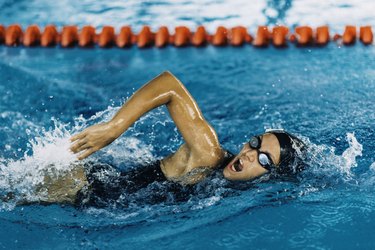
Female Frestyle Swimmer

The speed of human swimming is limited.

Image Credit: microgen/iStock/GettyImages

Do you think you could outswim a shark? In 2017, 28-time Olympic medalist Michael Phelps donned a monofin and pitted his mad swim skills against those of hammerhead and great white sharks.

Although Phelps reached a max speed of 8.8 miles per hour — 87 percent faster than his fastest world record, according to Ultimate Swim Fin, the official distributor of the Lunocet Pro Monofin worn by Phelps — the average swimming speed of the sharks won the race.

Tip

Although Michael Phelps can reach 8.8 miles per hour wearing a monofin, the fastest unassisted human swimmers reach speeds of 5 to 6 miles per hour over short distances.

Know the Water Conditions

How fast a human can swim not only depends on fitness; it depends on water conditions also. Swimming in a pool that is temperature-controlled and free from forces of nature such as waves and currents will naturally produce faster swim times. It’s also easy to veer off course in open water when there aren’t lane lines to keep you in check.

Read more: 7 Tips to Become a Better Swimmer

Competition pools in the U.S. average 78 F to 80 F, according to the United States Water Fitness Association. That’s ideal for the fastest national swimmers, such as Josh Schneider, to swim at speeds of up to 5.3 miles per hour in the controlled conditions for short distances. The Olympic requirements for competition range from 77 F to 82 F according to the Federation Internationale de Natation (FINA) the ideal for optimal human performance.

However, if other people use your local pool for other purposes than competitive swimming, it’s likely much warmer according to the association, which recommends water temperatures of 83 F to 94 F for arthritic or young swimmers. Water below 77 F starts to affect your breathing and average swim speed; water at 70 F or below is dangerous to swim in without a wetsuit per the National Center for Cold Water Safety.

Environment and Average Swimming Speed

Schneider’s national record of 19.36 seconds in the 50 freestyle took place in a 25-yard pool. Put the same swimmer in a 50-meter pool and his time slows to 21.78 seconds or 5.1 miles per hour. The reason is partly because 50 yards equals roughly 46 meters. But his powerful underwater acceleration off the wall in the middle of the short-course swim also helps rocket his speed by 0.2 miles per hour.

Read more: The Ultimate Body-Weight Beach Workout

Open water swimming will slow you down not just because you don’t have any turns to boost your speed. The fastest woman to swim a mile in a 50-meter pool is Luane Rowe, whose national record of 17:22.39 minutes (a speed of roughly 3.5 miles per hour) stands since 2012 according to U.S. Masters Swimming.

Conversely, it takes swimmer Abigail Nunn 20:02.38 minutes (3 miles per hour, approximately) to complete a mile swimming alongside a cable in open water.

Swim Faster at Race Pace

If you want to increase your own speed and spend less time in the pool, try training at race pace. Known formally as Ultra Short Race Pace Training (USRPT), the technique pioneered by Professor Emeritus Brent S. Rushall of San Diego State University involves training the body to swim at a maximum speed over short distances.

The brain “codes” the faster swim into its neurology, effectively training it to move at max speed. When the goal is swimming fast, training your body to plod along at a slow rate over a long distance is counterproductive.

Break your fastest swim time for your target event into chunks. For example, divide your fastest 100-meter freestyle time by four to set a target time for 25-meter repetitions. Your goal is to meet this target time for a set number of repetitions with a specific 15- to 20-second rest interval between them before you “fail out” by your body being unable to maintain the race pace velocity.

Join a swim club specializing in USRPT or enroll in remote sessions to work with coaches trained in this cutting-edge technique to improve your average swimming speed. Clubs in the U.S. currently offering USRPT training include the Race Pace Club in California or Sedona Race Pace Club in Arizona.
Swimmer motivation: Parents and other life authorities

Parents and other adults can help swimmers stay self-motivated.

Whether or not they might say so, kids look up to the important adults in their lives. Your feedback as the parent, grandparent, uncle, cousin, sibling, school teacher, or friend of a swimmer helps to reinforce their motivation.

Positives from parents

One of the things we coaches love hearing most is the feedback from parents about the progress that our swimmers are making in their life outside the water. Things like:

  • getting better grades, 
  • getting along better with their peers, 
  • enjoying practicing with their musical instruments, 
  • improving their athletic abilities,
  • becoming more self disciplined,
  • improving  mathematical and time management concepts,
  • succeeding at other interests or hobbies
  • feeling more confident in general

According to a 2017 review of studies by the University of South Wales, children’s brains benefited significantly from exercise-induced effects. The executive functions of the brain — self control, selective attention, working memory, cognitive flexibility, intelligence, and academic achievement — were the most positively impacted. 

Internal motivation is the No. 1 motivator for long-term success in both the sport of swimming and life in general. That doesn’t mean you should stay silent and just let them figure it out. What you do as a parent or other significant person in the life of a swimmer can provide some fuel to keep that internal fire burning.

The importance of reinforcement

So how can you help a swimmer reinforce self motivation? It’s easier than you think, and it doesn’t involve a lot (or any) sugary-sweet ego-inflation tactics. A “pat on the back” and acknowledgment of a job well done is always appreciated — but only if it actually was a well-done job. 

It can be very reinforcing to have someone notice your achievement when you’re already glowing inside about it yourself. Tune in and let your swimmer buzz about that good feeling they’re having and don’t worry, they won’t end up conceited by bragging on themselves a little and feeling positively about themselves. 

Just by its very nature, the life of teenagerhood does plenty to slap one down from time to time. Allowing them to develop a well-deserved positive self image based on one’s own self achievements is crucial to developing a healthy self identity. Poor self image is at the root of many bad choices such as addictions, unhealthy relationships, and lack of life motivation in general.

Nurturing self-motivation

Reinforcing your swimmer’s happiness at accomplishing a goal is pretty simple. Showing up to meets, helping out with timing, and volunteering for the team are all subtle ways of affirming your interest in their endeavors.

But how do you help a swimmer who seems to be losing their motivation? Learning what to do —and what not to do — can help guide them back onto the path of finding that internal fire of motivation.

Listen and acknowledge

The most important thing you can do for your swimmer is to listen without judgment, whether they are expressing positive or negative experiences. Kids need this external processing to gain clarity on their own feelings without being told how they “should” feel from someone who wasn’t in the pool inside their skin. Sometimes a thought just needs to be vented to someone they feel can listen and understand.

Many times, just saying something out loud sounds much less consequential than the gravity one gives it in their mind. Or they can get a self-sense of the tremendous improvement they accomplished when they hear themselves speak about how they’re overcoming a particular challenge. 

Let your swimmer talk about their time in the pool. Get the ball rolling with open-ended questions like

  • What type of sets did you do today?
  • How did you feel about your workout this morning?
  • Tell me about the most challenging (or most fun, or funniest, etc.) thing about practice today.

Tune into how they’re feeling and acknowledge that feeling: “Wow, that sounds like you were feeling pretty challenged about that.”

Guide, don’t solve

If your swimmer is discouraged about their lack of progress or anything else having to do with swim life, ask them what they’ve done to overcome the challenge. “How have you handled that so far?” or “What have you done to get past that plateau?” gets them focused on how they can be their own solution and advocate for themselves. 

Should they seem at a loss for ideas, ask “Have you talked to your coach about that issue?” “What did he/she suggest?” It’s okay if you don’t understand all the mechanics of techniques or sets or other technical things about swimming (and there won’t be a “pop quiz.”) By verbalizing what was told to them,  they must process it on a deeper level — learning by teaching the information, one of the most effective ways to wire information — and this can be the moment things “click.”

If their challenge involves social life at the pool or a peer, asking whether they’ve talked to that person directly is a good start. “How do you think that person will react if you tell them directly that this is bothering you?” “ What words would you use when talking to them?” “Is this something you feel should be brought to the coach’s attention?” are examples of effective ways to guide your child to find their own solutions from within themselves.

Encourage them to take action if needed

The easiest way to get your kid to clam up and start holding everything inside is to go talk to the coach or other swimmer’s parent about an issue they’re having. At the very least, they’ve missed an opportunity for self-empowerment, and — even if the issue gets solved — they can often feel powerless, humiliated, or even betrayed by you taking matters into your own hands. They’ll fear the future consequence of sharing things with you if they feel out-of-control of what happens after they do so.

Ask your swimmer, “What action do you feel you need to take?” As they reflect on their answer, they might find that no action at all needs to be taken — they just needed to vent.  Many times the answer will be something along the lines of needing to listen to the coach more, work on the technique, work on their self-talk when they start to get tired, etc. Again, this verbal processing is helping them build confidence in figuring it out on their own.

“How would you like me to support you in this?” is a good follow-up question. Most times you’ll hear that they’ll take care of it themselves, so let them. Other times, you might get asked to help them wake up 10 minutes earlier so they’re ready to make it to practice in time for getting a good warmup, hold them accountable for doing dry land exercises, or help come up with pre-workout food that fuels their body but won’t make them nauseous.

Even very young children are capable of conversing with the coach or a peer to solve an issue, and your confidence in their ability to do so can be very esteem-building to their identity. Should your child have difficulty in being understood, ask if they want you to go with them for assistance. Even non-verbal children can be very effective in communicating their needs and enjoy the independence of being able to try on their own. 

Focus on the whole picture

It’s been said that “the best coach is the coach.” Instituting extra dryland exercises, a rigid diet, swimming-related reading, or other at-home activities designed to improve their swimming game can actually backfire and result in a swimmer losing motivation completely. Your coach will let you or your swimmer know what or if anything needs to be done at home.

Allow your child to develop their identity outside of being a swimmer when they’re away from the pool. A kid can become overwhelmed by the pressure of having this singular identity thrust upon them. Laugh, play, watch movies, do silly stuff, learn new things, let them hang out with non-swim friends, and just have fun discovering all the various aspects of their personality. 

Taking time for interests outside of swimming is vital to developing a well-rounded person. And inevitably, when they’re experiencing a plateau or are feeling out of alignment with swim stuff, it won’t feel like their entire world is crashing down. And that’s key to staying motivated from within, both inside the pool and out. 

If you’d like to be part of a motivated team, check out our team website, Sedona Race Pace Club. For more details, contact our head coach, Sean Emery at 928.254.7765.

Swimmer Motivation 2: The Social Kick

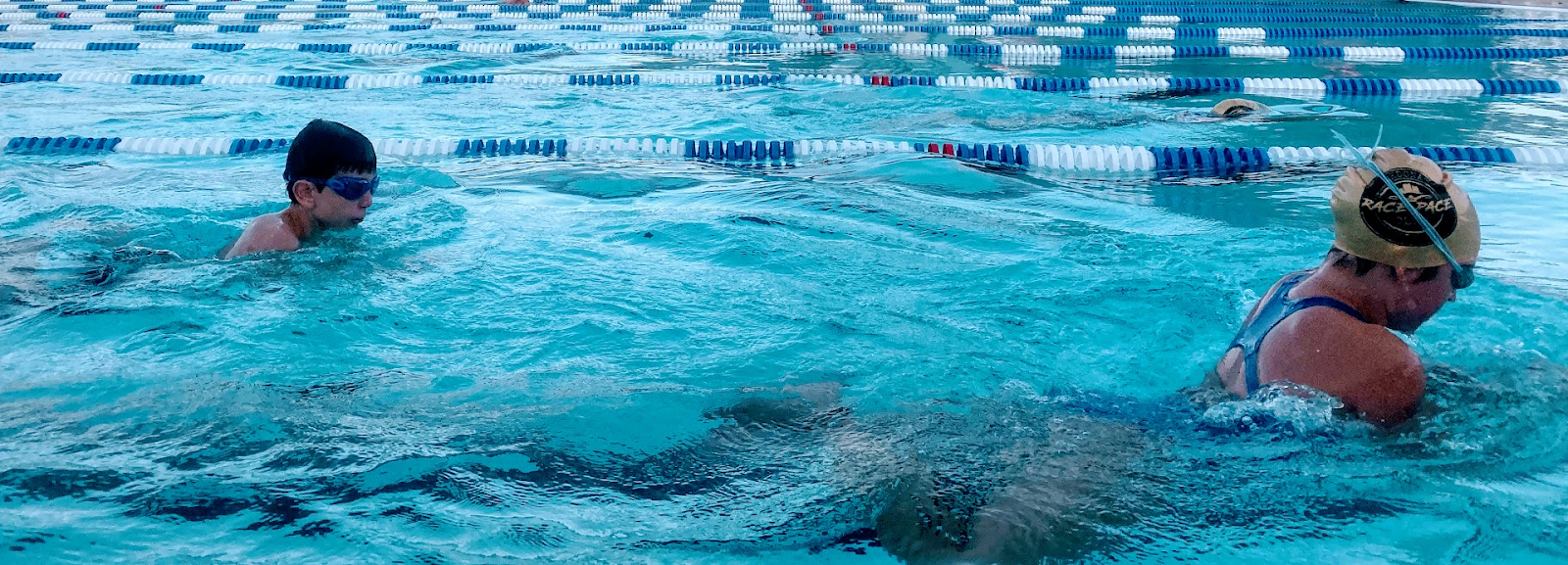
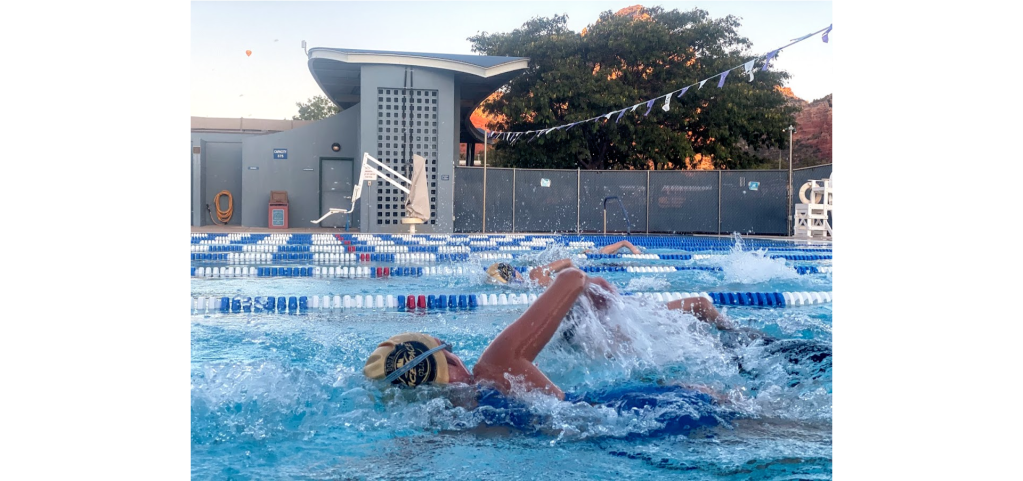
Sedona Race Pace Swimmers enjoy the fun of racing one another in practice. 

“Ultimately, your motivation needs to come from within,” per Sedona Race Pace Club Head Coach Sean Emery. “You can use outside goals like achieving your best times to help, but without your own inner drive, you’re not going to stay motivated.”

Being self-motivated doesn’t mean that other factors don’t come into play, though. Ultra-Short Race Pace Training founder Brent Rushall, Ph.D. states that internal motivation is the number one reason for swimming success and continuing the sport long term. But factors such as the social aspect, parental encouragement, and a good coach all add to the equation.

Friendly competition with one’s peers is one reason kids might join a swim team. But that same social connection is the No. 2 motivator why kids want to keep swimming year-round long-term according to Rushall.

Although the primary competition in USRPT is the challenge of swimming your best sets and steadily improving in factors such as the number of successful repetitions, the people in the next lanes can make the make-or-break difference that keeps a swimmer motivated or discouraged.

Forming lasting friendships with teammates is common, but social motivation goes far beyond sharing a lane with your new bestie. Social interactions in the pool help form how a child interacts with peers at school and works with others when they embark on a career. 

“It is important for procedures to be developed where swimmers have the opportunities to reinforce and recognize each other for good behaviors and achievements. Experiments have shown that peer reinforcement in swimming settings is more influential than coach reactions “ 

Brent D. Rushall, Ph.D., USRPT Founder

You’ll sometimes see us doing swim technique training where kids work in pairs giving each other feedback. Other times, the entire team will observe one person at a time with the group giving feedback to the swimmer. This not only builds social interaction, but swimmers observing from different angles underwater can uncover attributes of the stroke not readily apparent from the coach’s viewpoint. 

Peer groups are uniquely in tune with the unique motivational reinforcers that are part of the swimming subculture. Here are some ways that effective team members positively motivate one another:

  • Friendly competition
  • Encouraging one another to make another rep, 
  • Helping hear times called out by the coach
  • Saying “good job” 
  • Noticing and being pleased for teammate successes
  • Helping new people or those who didn’t hear the coach understand what the next set involves
  • Helping new people keep track of their intervals, fail times, how many fails, etc.

Paying attention to what’s going on in your own lane and set can be a lot to keep track of for swimmers less experienced with USRPT. But a well placed “you got this” or “you can do this” can mean a burst of energy for a tired swimmer striving to improve their set.

Another benefit: Children need the opportunity to teach in order to learn effectively. When swimmers reach out and help each other with skills and performance, it’s an ideal opportunity to enhance learning opportunities as well as the motivational level of the other swimmer. 

Swimming With Power

Much of what we emphasize in swimming technique at Sedona Race Pace Club involves being as streamlined as possible to create the least amount of drag. Body position, head position, and body roll are the three most fundamental ways to eliminate water resistance.

The way you breathe, kick, and place your hands in the water are also vital aspects.  But reducing water resistance is only half the story of swimming fast: The rest of the story comes through having a powerful, efficient stroke propelling you forward.

Power—not just strength— is the driving force in swimming fast, according to USRPT’s founder Brent Rushall, Ph.D.  Where strength involves developing force through mass and acceleration, power also adds distance and time into the equation.

Athletic power is so important to swimming that Rushall recommends spending twice as much time honing it as any of the other stroke components.  The reason is that power comes down to the amount of useful work (propulsion) an athlete can do in the shortest amount of time. Combined with techniques to reduce water resistance through correct head and body position and breathing technique, this will significantly improve an athlete’s speed in the water.

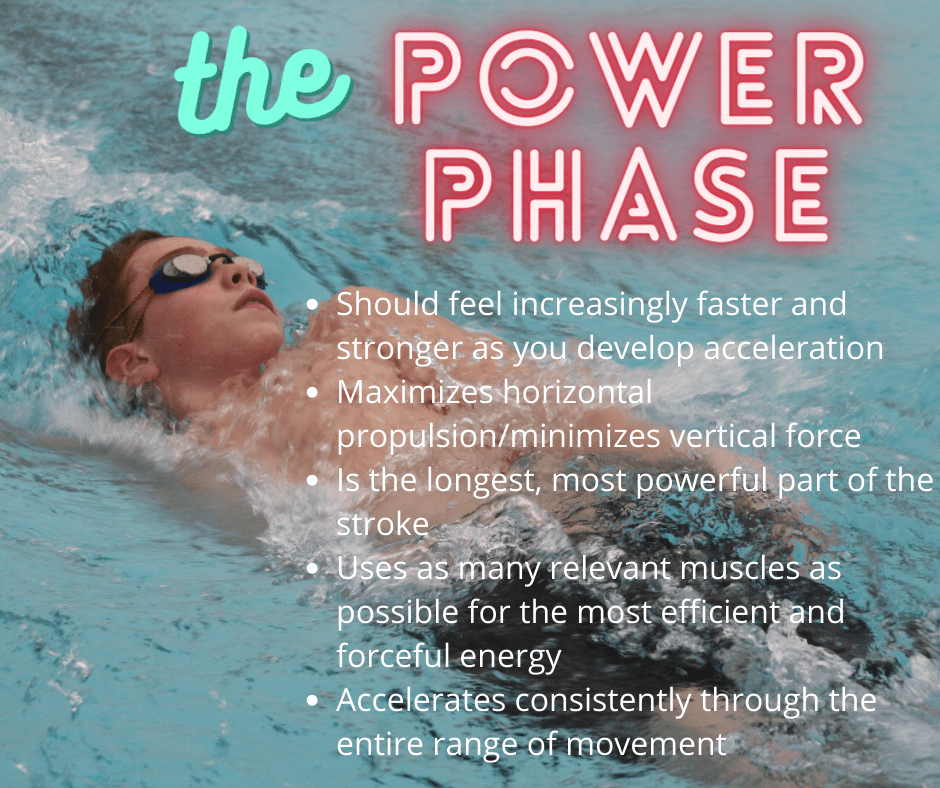
The Power Phase 

  • Should feel increasingly faster and stronger as you develop acceleration
  • Use horizontal propulsion with minimal vertical force
  • Be the longest, most powerful part of the stroke
  • Employ as many relevant muscles as possible for the most efficient and forceful energy
  • Accelerate consistently through the entire range of movement
Want to develop more a more powerful stroke? Contact our head coach, Sean Emery at 928. 254.7765 or visit sedonaracepace.com to find out more!

Why donate to SRPC on #GivingTuesday

“Like a fish out of water”

This year has been full of surprises! Let’s take coronavirus pandemic for starters. No matter how you might feel about staying home, masks and social distancing, saying that it’s dramatically affected everyone’s life would be an understatement. It probably impacted our youth —our future leaders and societal workers — probably more than any of us adults, according to a recent study published in the Elsevier Public Health Emergency Collection.

Here in Sedona, the pandemic took our swim team out of the water in mid-March with the Arizona stay at home order. Our swimmers had no access to the water for many weeks but our swim coaches did an awesome job of keeping team spirits — and heart rates —up with daily dry land training sessions during the many weeks when we had no pool access. 

But the ability to get in the pool wasn’t the only thing that the COVID interrupted. The usual year round fundraising events requiring face-to-face contact — such as yard sales and car washes — had to be canceled. 

As kids worked up to the big meets at the end of season, in-person competitions were also eliminated. To this end , SRPC purchased their own timing equipment, trained meet marshals and lane officials and conducted two time trials where athletes can try for their best times and compete in a virtual meet with others. 

All this added up to a lot of out-go and not as much fundraising income. You see, the team’s access to the pool through the winter requires covering a big share of pool maintenance costs that add up to more than $1,000 monthly. 

As we go into giving Tuesday, we’re relying heavily on the generosity of those who believe in supporting youth athletics on a local level. 

More than just swimming laps

Getting in the pool and training is far from the only point of keeping our youth swimming year round. Sedona Race Pace Club uses ultra-short race pace training (USRPT) that engages the brain as well as the body. Check out some of the side benefits of USRPT in the graphic below. 

Help provide safe social activity

As anyone who has grown up in Sedona will tell you, extracurricular opportunities for youth aren’t as bountiful as they are in a big city. Kids are highly social and this year’s enforced isolation has been difficult on them (as well as on parents, but that’s another story).  

The swimming pool environment is one of the safest places for kids to participate in athletics according to the CDC and World Health Organization. It gives kids a good safe environment to find their inner athlete and connect with their peers as well. SRPC uses social distance, masks and sanitization protocols to ensure our athletes stay safe. 

Your generous donation to our #GivingTuesday fundraising campaign will help to continue pool access for our Sedona athletes through paying for winter heating costs.

Help kids overcome life challenges

Being able to challenge oneself and overcome challenges in the pool definitely takes the mind off of above-water fears such as pandemics, changes in parental financial situations and stressful circumstances that are inevitable in even the most harmonious families as individuals strive to dwell together in the confines of their own immediate household. 

Empower education

Race pace training helps kids learn skills they can use outside the pool including mathematics, geometry, physics and more. A daily workout involves calculating changing intervals, keeping track of best times and sets, tweaking physical technique angles, and figuring out percentages of times for pacing for starters.

Kids’ brains are engaged with having to figure out these answers themselves. Coaches and teammates help the new swimmer learn how to keep track of all of this, and helping the swimmer building confidence in their own abilities. 

Not to mention, keeping our kids swimming provides them with  an opportunity to qualify for athletic scholarships and further their education through their own efforts.

Click to Donate

We know you’re probably inundated with worthy causes but ask you to consider supporting our Sedona AZ athletes.  You can donate on our Facebook #Giving Tuesday fundraiser —donate early in the morning and your donations will be matched until the max is reached — our head to our website at Sedona RacePace.com to make a tax-deductible donation at any time

Finally, please share this fundraiser on your social media feeds to help get it in front of more people who want to support the cause of youth athletics in Sedona and the Verde Valley. 

Thank you for your generous support!

Prepare to give your best

Getting the most from your USRPT workout

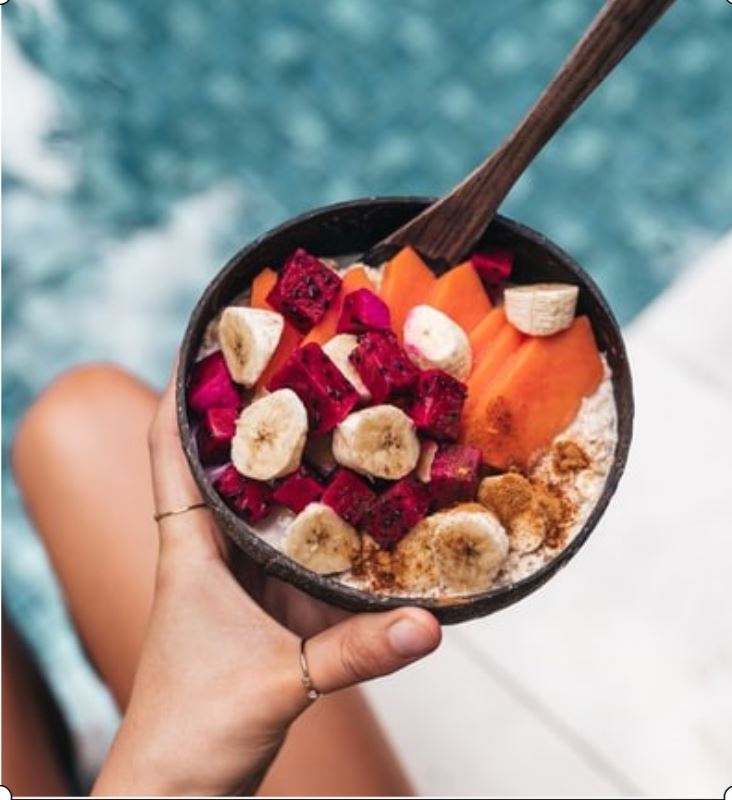
A pre-workout snack such as fruit and yogurt can fuel your body with adequate carbs and protein.

Getting the most from your USRPT workout doesn’t stop when you hop out of the pool. There’s much you can do when you’re out of the water to help your body recover and prepare to get the most out of your next swim. 

Fueling and re-energizing your body is important between workout sessions. This includes getting enough rest and nutrition for your body to be ready to go again at the next scheduled workout session 

Refuel/replenish your body’s energy stores

Once you leave the pool, you should focus on refueling your body with plenty of protein, sufficient calories, and adequate pre-workout nutrition. Everyone’s body is different and the specific amount of calories your body will require as fuel will vary on your body type, genetics, age, and even cultural eating patterns. However, thinking of food as fuel for the body will be the ticket to getting the best performance from it both in the pool and in everyday life. 

“Fried foods, sweets, and sugary beverages, although tasty, aren’t the ideal foods in which to anchor the diet if swimmers want to take their performance to the next level.”  

USA Swimming 

 USA Swimming recommends the following basic dietary guidelines on its website:

  • Eat every 3 to 4 hours.
  • Pack snacks for pre-and post-workouts, especially if you have an early lunch period at school.
  • Choose foods from all food groups throughout the day; don’t limit carbohydrates, protein, or fat.
  • Good breakfast choices include: handheld egg, cheese, and lean meat sandwiches, peanut butter toast, cereal with milk and fruit, yogurt with granola and fruit, or toaster waffles with almond butter.
  • For snacks, try cheese sticks, whole grain crackers, beef jerky, fresh fruit, trail mix, nuts, dried fruit, 100% juice boxes, smoothies, or cottage cheese.
  • At dinner, choose lean meats and remember that lean beef, pork, or dark meat chicken boost important nutrients like zinc and iron, compared to chicken breasts. Fish, like salmon or tuna, provide protein and healthy fats and pasta dishes, like spaghetti and meatballs, deliver protein, carbs, vitamins and minerals.

Do you have questions about how you or your child can benefit from ultra-short race pace training? Contact Head Coach Sean Emery at 928.254.7765 or visit sedonaracepace.com for more info. 

The importance of correct stroke recovery

Each week, swimmers at Sedona Race Pace Club focus on a different aspect of their technique. Technique is crucial to the Ultra-Short Race Pace Training that we practice because it enables you to swim at maximum speed with the best leverage on the water— without injuring yourself.

Why recovery is important

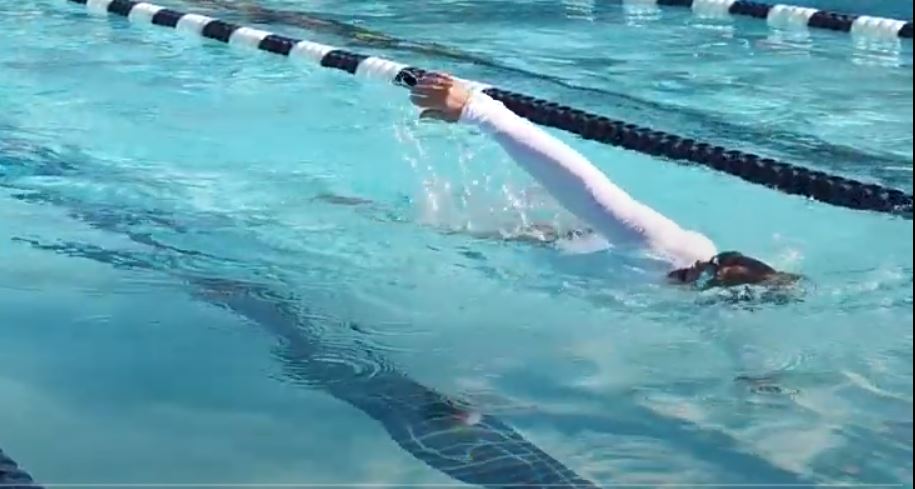
This week, we’re focused on stroke recovery. That is the part of the stroke from where the power phase completes and the arm repositions itself to make the initial action of the stroke. In breaststroke, the recovery phase takes place in the water, while the arm moves through the air for freestyle, backstroke, and butterfly. 

It might seem surprising that how your hand and arm pass through the air or water while returning to the starting position matters as much as any other part of the stroke.

“Consideration of the recoveries in all strokes is important because how they are performed will cause reactions in other parts of a swimmer’s posture, which can have varying effects on propulsion.”

Brent Rushall, Ph.D., Professor Emeritus at San Diego State University and founder of USRPT

In strokes with alternate arm movement — freestyle and backstroke — what the out-of-water arm does affects how the other arm performs underwater. This is part of the body’s bi-lateral functioning: What you do with one side of the body is mirrored to a certain extent on the other side of the body.

So when the coach modifies a swimmer’s recovery arm action, the response doesn’t just affect the recovering arm. That means, the underwater mechanics can’t get ignored while working on the recovery technique for these alternating strokes. 

Effects of improper recovery

For example, swinging your hand out wide when recovering on freestyle will make your underwater arm go wide in a far less efficient stroke pattern. You can’t effectively perform the correct body roll with your arm out wide, therefore, the amount of drag produced has a slowing effect on your overall stroke.

But that’s not the only thing that a wide recovery in freestyle does to your body. Your entire body is thrown out of an ideal streamlined posture with hips moving to the side to offset the wide arm and legs moving to the opposite side. Stroke rate slows since the non-streamlined stroke takes more time and effort to perform.

Arm recovery is equally as important in the other three strokes as well. In each, the best recovery technique is the one that takes the least amount of time, causes the least development of water resistance and doesn’t result in added counter-balancing movement and effort. 

Elements of a great recovery

  • A good recovery technique in any stroke keeps the body in a streamline and maximizes the forward movement with the least amount of effort needed. 
  • A good recovery technique positions the hand for the initial movement and eliminates unnecessary actions that increase resistance or require extra time.
  • Coordinates with the propulsive action of the pulling arm in alternating strokes
  • Keeps non-propulsive phases of symmetrical strokes (butterfly and breaststroke) to a minimum
  • Create as little water resistance as possible 

When you’re ready to take your stroke technique to the next level, contact Head Coach Sean Emery at 928.254.7765 to book in-person workouts with Sedona Race Pace Club in Sedona, Arizona, or a virtual session. Or visit sedonaracepace.com for more info.

Getting the most from a USRPT workout

It’s in YOUR Control

You’ve no doubt heard it said that “90% of success in life is just showing up.” While that certainly might be true in general, Ultra-Short Race Pace Training (USRPT) is an exception to the rule.

“It’s more than just showing up at practice,” said Sedona Race Pace Club Head Coach Sean Emery to his swimmers at a recent morning workout. “You have to bring your SELF to practice!”

That means showing up with your A-Game at every practice. Your best self, mentally and physically, is what it takes to see max results in the pool. 

Be ready to exert yourself

Race pace training means giving it all you’ve got — on every repetition. Saving back energy to “last through the set” is counterproductive. Coach Sean advises swimmers to focus on the repetition at hand: “Get in this one great rep so you can feel accomplished.”

“How one feels about exertion moderates the response to exercise and effort. When one exercises with a positive attitude, the efficiency of physiological function is optimal. However, when the attitude is negative that efficiency is reduced.”[1]

Brent Rushall, Ph.D., Professor Emeritus at San Diego State University and founder of USRPT

If you’re dreading that 200 fly training set on Monday morning and letting yourself take it easy and fail out early in the set, you’re doing yourself a disservice. The set will continue to be difficult for you until you force your body to adapt.

But there are more far-reaching consequences also: “If you’re not ready to play all-out and give your best effort, you’re not just magically going to see your best times at the next meet,” advises Coach Sean.

Are you ready to “up your game” with USRPT workouts? Call Coach Sean Emery at 928.254.7765 or visit sedonaracepace.com for more info on joining the team.

Learn more about getting the best from your USRPT workout by checking out other articles on the blog!

How to count your reps using the clock

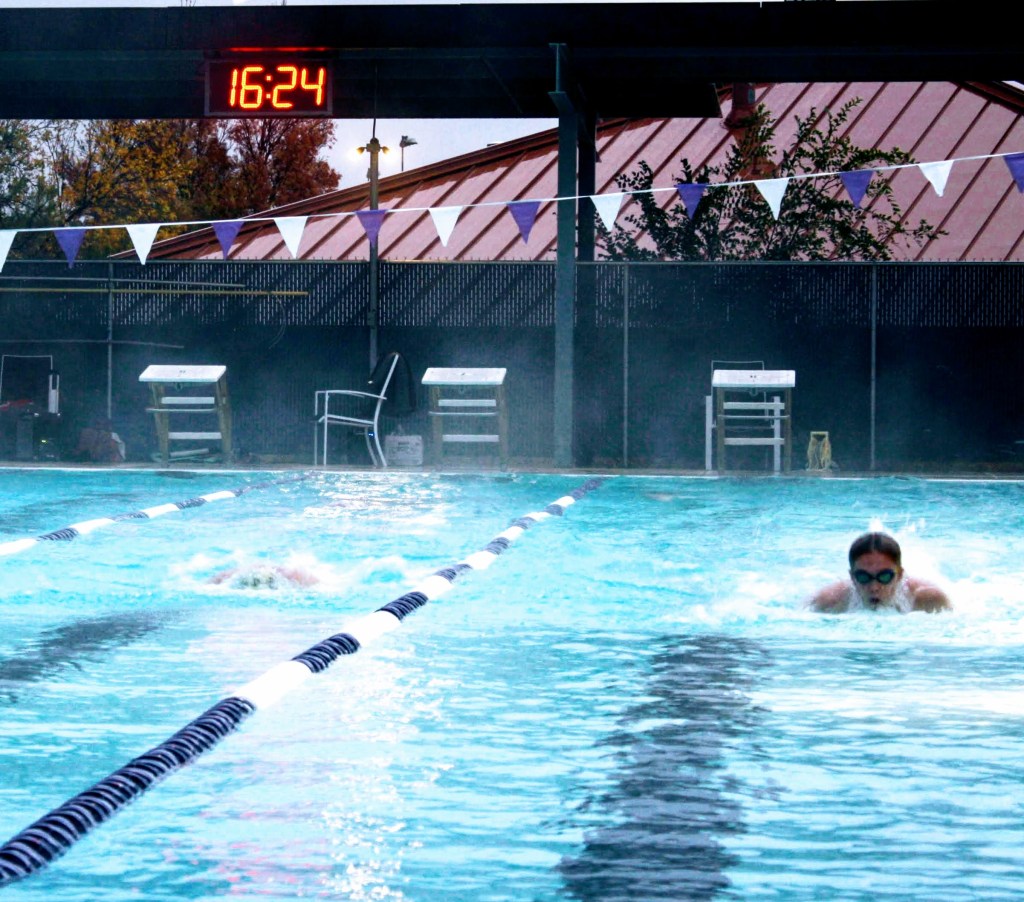
It’s easy to keep track of how many reps you’ve done using the time clock.

With so much to think about during USRPT training, it’s not too difficult for swimmers to lose track of how many reps you’ve done, especially when you’re doing a set that might have 40 or 50 reps. Learn a few basic calculations using the pace clock and you’ll easily be able to get back on track.

Losing track of reps

There are so many things that a USRPT swimmer thinks about during a set: a specific aspect of stroke technique, meeting the goal time, what interval to leave on, what their time is, how many failed reps, etc.  So it’s not difficult to let the total number of reps escape the brain while focusing on other things, especially when the body begins to get fatigued.

It can be particularly challenging when you’ve done approximately the same number of reps as the time the coach is calling out. Say, for example, that you just did a 25 yard swim in 15 seconds and you’re on rep No. 13. When the coach calls out “15,” your mind might naturally latch onto the 15 as the number of reps you’ve done.

Some swimmers will keep track by turning a piece of their equipment such as a flipper or kickboard by a quarter-turn every 5 reps. But the easiest way is just by watching the clock.

Tracking reps like clockwork

Look at the time that you’ll be starting the first rep and remember it: That is the key to tracking the number of repetitions. Just multiply the number of reps you’re doing by your interval time and you’ll know what time the set will finish.

The easiest example is a one-minute interval. If your first push-off for the set is at exactly 6:00 a.m. [0:00 on the Sedona Community Pool pace clocks], you’ll push off for your last swim in a set of 40 at 39:00. This wraps your 40-minute set up at the 40-minute mark.  

You can easily calculate what rep you’re on at any time during the set. Your 10th rep will push off at 9:00, your 15th at 14:00, etc.

Of course, sets rarely start exactly at the top of the hour, so you will need to do a little figuring before you begin to get a feel for the set’s timing. However, it’s not too difficult to determine how long the set will take and what times you’ll be halfway [or ¼ or ¾ of the way] done with it.

Calculating other intervals

A 55-second interval set takes 36 minutes and 40 seconds to complete; a 50-second interval takes 33 minutes and 20 seconds. That means you’d swim your 40th repetition at 55 seconds leaving on 35:45 (completing the set at 36:40) if you started precisely at the top of the hour. You’d swim the 40th on a 50-second interval at 32:30 (completing the set at 33:20).

It’s also fairly easy to calculate your reps by when you push off the wall for each rep if you’re accurately leaving on your correct interval. For example, on a 55-second interval, you’ll leave 5 seconds earlier each rep. If you started the set on the “top” [:00], your next rep would leave on the :55, then the :50, then :45 and so on.  

When you leave the wall on the :05, you know that’s rep no. 12 (as 60 seconds divided into 5 second segments equals 12) Pushing off for the second time on the :00 begins rep no. 13.  So the second time you come around to the top is rep no. 25, and the third time is rep no. 37. That means you only need to count three more to reach 40, and you’ll be leaving on the :45 for the last swim. 

The same idea holds true for 50 seconds, only you must leave 10 seconds earlier each time. So you’re leaving on the :00, the :50, the :40, the :30, etc.  Each time you leave on the “top” again, you’ve completed six reps and are embarking on the seventh.  You’ll complete the set leaving for the last rep on the :30 after having left on the “top” a total of seven times: on Reps 1, 7, 13, 19, 25, 31, and 37.

Are you ready to up your competitive swimming skills and improve your swim times? Visit our website at http://www.sedonaracepace.com or contact Coach Sean Emery at 928.254.7765

What are they THINKING anyway?

A USRPT Swimmer’s Thought Life

To those sitting on deck watching the average swimmer in traditional training slogging back and forth from one end of the pool to the other, the endeavor might seem endlessly boring.  You might event think that some music playing over swim headphones might be in order.

“Oh, my child would never stay focused staring at a black line while he goes back and forth, back and forth,” I’ve heard parents say. But the thought life of USRPT swimmers is amazingly complex, and that black line is little more than a background prop to a very rich thought process.

Building a foundation

First, there’s technique. That’s the first thing that a race pace swimmer needs to be thinking about. For our new swimmers, that’s the only thing we have them focus on at first. And that’s not as simple as it sounds. There are eight different components to each stroke that our coaches teach. 

They don’t just teach it once, either. It’s not unusual to hear a practice focused on one small aspect of a stroke — such as the hand entry or power phase — all week. That’s because permanent change happens only when the swimmer overlearns each concept, making it second nature in their brain and body. Otherwise, they’ll revert back to the old way that their neurology is “comfortable” with.

Revving things up

But once a newb swimmer has the basics, there are other things to think about.  Like the fact that it’s called “race pace training” for a reason. The second step is to hold that technique while going as fast as you’d go in a race. 

It’s based on the “Principle of Specificity” and it makes sense —learn good technique at a slow, easy pace and your body will be trained to swim slow and easy. But at that relaxed pace, things will invariably fall apart once you step up the effort, especially once fatigue sets in. 

This adds more things to think about, including whether the new technique is improving your stroke count, if you’re improving your best time, making your fail time, and how many repetitions you’ve completed before you “fail out” of the set.

More advanced swimmers are also keeping track of their interval and any associated math, such as calculating when you need to leave the wall if you’re on a 55-second interval. You can even figure out what number repetition you’re on if you forget by doing the math in your head — provided, of course, that you made note of what time the set began. 

Upping the mental game

So correct technique at high speeds and lots of math including intervals and various time goals are all being simultaneously kept track of in the head of a swimmer. But there’s even more mental aspects to USRPT training with Sedona Race Pace Club. The training helps swimmers connect with their inner athlete and improve their mental game early on in life — a skill they’ll take with them throughout a lifetime. Things like:

  • Learning to set goals
  • Understanding how to break down the goals to create actionable plans
  • Experiencing short-term  failure as a positive step to achieving long-term goals
  • Developing focus
  • Learning to coach themselves through tough situations and anxiety through self-talk
  • Using visualization and small steps to achieve and condition desired outcomes.

Having fun while learning

Don’t indulge the fear that maybe your kids just aren’t up to all this mental activity. The process is laid out gradually by the Head Coach Sean Emery and his assistant coaches according to each swimmer’s skill level and capabilities. Other teammates help inexperienced swimmers learn how to keep track of the various things as they are presented. 

All the while, children are not just learning to swim better, they’re learning ways to cope with challenges that will translate into their outside life as well. It’s not unusual to hear a parent warmly comment that their child has suddenly done better in other areas of life such as music, mathematics, sports or social skills. 

The fun factor of team-building activities, the constant opportunity of feedback of bettering their performance in some aspect each day leads to many of our kids becoming self motivated. They look forward to being in the pool each workout to achieve small successes and betterments that 

As one of our swim moms put it, “The payoff isn’t in seeing a best time at a meet or even a first place. It’s in seeing him be so motivated about something he truly loves doing that he’s rolling out of bed at 4:30 a.m. ready to go.”

The sound of a self-motivated teenager? Now that is music to everyone’s ears!


Call Head Coach Sean Emery at 928.254.7765 to find out more about how training with our Sedona, AZ, swim team can benefit your child both in and out of the water.