Featured

Back-to-Swim School Shopping: Essential Gear

Not sure what your child needs for their private swim lessons or Pre-Competition Swim Skills class? Check it out here.
Get geared up for the pool by shopping online.

Check out essential gear for swimmers ranging from beginners to beginning swim team.

During summer at your city’s learn-to-swim programs, your child needs only a bathing suit and towel for their swim lessons. Municipalities have a ready stock of all items potentially needed in lessons. 

However, if your child is continuing to swim in the off-season with private lessons or swim team activities, you might get them a few additional items. Read on to see what you should bring.

Back to Basics

At every level, there are four things your swim student should bring with them to the pool. A well-fitting suit, goggles, a towel, and an unbreakable water bottle. Swim caps are also recommended for children whose hair is long enough to cover their eyes when their hair is wet.  

When your child is in swim school, these four things are enough, as additional equipment is provided during the lessons. You might wish to get them some of their own equipment to practice with between swim lessons. Check out info on additional equipment for swim lesson practice.  

Select a suitable swimsuit

Picking out a swimsuit together with your child can be one of the great memories of summer. Your child might enjoy fanciful suits with 3-d flowers, billowy streamers or other decorative items.  Although your child might be attracted to a particular style, the cutest one out of the bunch may not be the most functional for swim lessons.

Swimsuits get baggier in the water.  When children are swimming horizontally, this can cause them to feel self-conscious and embarrassed as the suit droops and exposes the chest area on girls or the pelvic region of boys. Check out the best swimsuits for girls and suits designed for boys

Shirts and other outfits meant to provide modesty, sun protection, or extra warmth can add pounds of weight as they absorb water, making it difficult to swim. Sleeves often stretch, and kids lose the feel of the water as they swing long water-laden fabric that is billowing along beyond their hands. Be sure to look for long-sleeved swimsuits rather than rashguards or swim shirts. 

Goggles for clarity

Beginning swimmers that show up without goggles usually don’t want to put their face in the water. They find the chlorinated water can feel strange to their eyes, or even create an unpleasant burning sensation if pool chemicals aren’t right. Goggles hold the added bonus of helping them  see underwater. As children learn to dive for toys, it’s crucial for them to be able to open their eyes and see what they’re picking up.

Getting a well-fitting pair of quality goggles and letting them practice wearing them at home will go a long way to ensure they can make the most of the limited time they have with their instructor instead of constantly fiddling with dollar-store goggles that break or come loose. 

Check out Junior-sized goggles.

Keep hair out of the eyes

A swim cap is optional at the swim lesson level, but by the Pre-Competition Swim Skills class, it’s a good idea. It all depends on their hair length. The rule of thumb is if the hair can cover their eyes when wet they should wear one. This allows your child to keep their head in the correct position without having to tilt their head up to keep their hair out of their eyes and mouth. 

Long hair should always be secured in a ponytail, braids or other fashion that prevents the hair from tangling around the arms, interfering with their ability to hear, or covering the face. Such a hairstyle also makes it easy to put the hair up inside a cap and helps the cap stay on as hair is not shifting around inside the cap. 

If your child doesn’t like wearing a swim cap, they might respond well if it’s fun and cute, has extra room for long hair, or is made from stretchy fabric. There are also roomy caps designed for long hair. Check out these caps for kids who don’t like to wear swim caps

Wrap them up in warmth

Even though the pool is heated to a balmy 82-84 degrees for your child’s swimming lesson, cooler days of autumn and winter can make it challenging for children to want to get OUT of the pool after their lesson ends.  An oversized fluffy towel or absorbent changing poncho ready to enfold them can make it easier to trade the warmth of the water for the cool air outside. 

A fanciful towel such that your child gets to help pick out comes with lots of benefits:

  1. Make it easier to get out of the pool – It’s amazing how many kids cry when their lesson is over, and a fun, warm towel is a great lure for helping them transition out of the pool.
  2. Little bodies lose warmth easily and it can be easy to bundle them up and take them home while they’re still warm from being in the pool. 

A changing poncho is a great alternative to a traditional towel. It usually has a hood, covers them completely, and can also be worn under a snuggly parka when the weather is cold outside, so you can whisk them from pool to the car and home to a warm bathtub or shower. 

Unbreakable water bottle

It might seem counterintuitive that a body immersed in water would lose hydration. Bodies working hard in the pool can actually sweat, and even more body fluid is lost through the breathing exchange when kids swim.  For this reason, children should have access to water or another clear hydration fluid should they need it during their lesson. A non-spill, unbreakable container such as one made of stainless steel is ideal. Fun & kid-friendly designs can help remind them to take a sip every so often. 

Swim fins

Swim fins help swimmers develop a powerful kick and train the largest muscles in their body. Kids in swim lessons can also benefit as fins help them quickly develop necessary muscles to help them hold themselves horizontally in the water. 

The best fins are swim fins of short or medium length. Long scuba fins cause kids to have to use a long, floppy kick when kicking along the top of the water. They are easy to tell as they are quite long and usually have a split down the middle of the blade.

Fins should fit snugly to prevent falling off during practice. A pair of thin cotton socks or scuba socks worn underneath can help prevent friction burns. Rubbing the tops of the feet with vaseline can also lessen friction. 

Congratulations on taking the steps necessary to get what gear your child will need for swim lessons! Check out all your swim gear needs at our online store. Affiliate link profits go to help keep swim lessons rolling year-round in the Verde Valley!

Featured

Why are the coaches yelling?

A good coach needs to be loud. Here’s why.

It can be a little surprising when a new parent or child arrives at the pool to hear the coaches yelling loudly at the kids in the pool. If you’ve ever had a bad experience with being yelled at, your first instinct might be to turn on your heel and make a run for it! 

Don’t worry — there’s a perfectly good reason why coaches need to yell.

 To be heard clearly by the swimmer

If you’ve ever had your head under the water, you know it’s almost impossible to hear someone on the land giving you instruction. As a swimmer moves through the water, it’s not uncommon for them to get water in their ears. This acts as an ear plug, muffling the sound of the human voice. Even after you pull your head out of the water, water can remain in the ear, making it impossible to hear or understand the coach if they’re not speaking very loudly.

So what about when they’re using kickboards and their head is out of the water? The sound of the feet kicking in the water makes a thump thump thump that is the primary thing the swimmer hears when using a kickboard. If coaches aren’t loud, they’re not able to give instruction or encouragement to a swimmer.

The water itself also makes sounds, both when you’re swimming and at the end of the pool. Water flowing into the gutters creates sufficient sound to make it incredibly frustrating for swimmers to hear instructions from the coach. 

As a swimmer with hearing challenges, I would practically be in tears from the frustration of not being able to hear what was being said. As a coach, I’m still trying to increase my vocal loudness to avoid “What? What? What?” of confused swimmers who can’t understand what is being said.

Because we’re enthused or passionate about what a swimmer is doing

Energy is contagious. If a swimmer is really giving their all in the pool, we know it and are usually really excited. It feels GREAT as a swimmer to have your coach yelling enthusiastically as you push to the limits of your endurance. We coaches might be shouting encouragement, celebrating their success, or providing a rhythm to keep their stroke in time (not too fast or slow).

Conversely, if a swimmer is dawdling along and is obviously distracted by items on the bottom of the pool or thoughts in their head, we’re going to yell to them to let them know we notice, get them focused, and let them know that what they’re doing matters. Swim team isn’t just about swimming fast, it also teaches kids how to overcome obstacles and challenging circumstances. Knowing that your coach is watching you and that it MATTERS to them that you give your best effort is the difference it takes many times for kids to be able to push through discomfort to achieve a personal best or complete the set. 

They invariably feel inwardly happy that they were able to do the thing and pushed through. Although we might be yelling at them to do so now, that feeling of self-satisfaction is something that will motivate them to overcome future challenging circumstances in school and in life. 

Positive yelling vs. negative yelling

Certainly, kids being able to hear the coach is a positive. However, yelling by a coach should never be abusive or demeaning. Positive yelling gives the child a healthy attitude about themselves and their abilities:

 “C’mon, you can do better than that!” or “you’re not giving this your best effort”  sends the positive message that the child is better than the present effort. It reflects the child’s potential or already proven abilities.Y

It goes without saying that yelling “YAAAASSSS!!  That’s it!” or other positives will help build a child’s self image and reinforce that what they’re doing is noticed and affirmed.

On the other hand, a coach shouting “you’re just a loser, you’ll never amount to anything” sends a child a negative message about themselves. Some of us grew up with this type of yelling by coaches in swimming or other sports (myself included) and know how disheartening this can be.

At Race Pace Club AZ, our American Swim Coaches Association-certified coaches regularly take ongoing training about motivating age group swimmers and providing a bullying-free environment. In addition, our team participates in USA Swimming’s Safe Sport program with annual athlete coaching training required. This means that you can feel confident your child is in a positive, enriching environment designed to help them bring out the best of who they are both in and out of the water.

Swim vs. Dance

Which offers more opportunities for women in the world of Higher Education?

by Coach Sean Emery

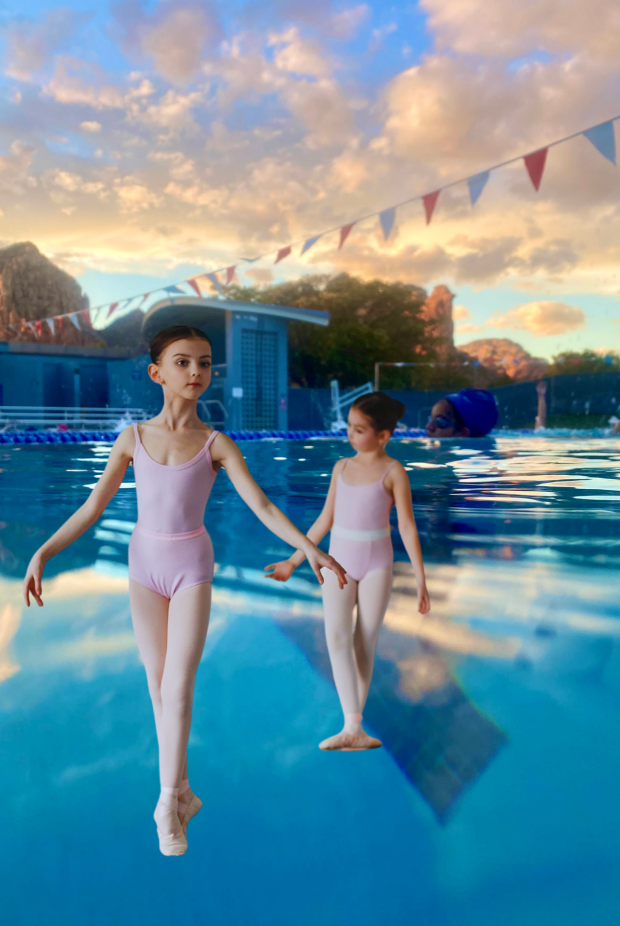
Two ballerinas dancing on water
Both swim and dance provide worthwhile physical activity. But which is more likely to help get your child a higher education?

When evaluating extracurricular activities with an eye toward higher education opportunities, the real-world opportunities for college-age women afforded by focusing on swimming far outweigh the ballerina dreams of girlhood.

Both activities develop a child’s commitment, focus, athleticism, and expertise, but swimming offers significantly more prospects when it comes down to scholarships, college recruitment, and long-term career benefits. Let’s explore why swimming invariably provides a greater advantage when pursuing goals of higher education

  1. Scholarship Opportunities in Swimming vs. Dance

One of the biggest advantages of swimming over dance is the availability of scholarships. Many universities, particularly in the United States, offer athletic scholarships for female swimmers under NCAA, NAIA, and NJCAA programs. Title IX has also ensured that women’s sports, including swimming, receive funding and support equal to men’s programs.

Dance, on the other hand, typically falls under the performing arts rather than collegiate athletics. While some universities offer dance scholarships, they are far less common and are often based on talent in specific dance styles rather than general athletic performance. Additionally, many dance programs are part of liberal arts or fine arts departments, which may not have the same level of financial aid or structured recruitment as college swimming teams.

  1. College Recruitment and Accessibility

Competitive swimming has a well-established recruitment process, with coaches scouting high school and club swimmers for college teams. Swimmers can enter official recruitment channels, attend scouting events, and benefit from national rankings that make them visible to college programs.

In contrast, dance does not have the same formalized recruitment pipeline. While talented dancers can audition for university programs, the process is often subjective and competitive, with fewer guaranteed spots compared to athletic teams. Many dance programs prioritize students who are already pursuing degrees in performing arts rather than those who simply want to continue dance alongside their studies.

  1. NCAA and Title IX Support for Female Athletes

The NCAA (National Collegiate Athletic Association) regulates college sports and ensures that female athletes receive the same opportunities as their male counterparts. Women’s swimming teams are widely supported at the Division I, II, and III levels, providing athletes with structured training, competition opportunities, and academic support.

Dance, while recognized as an important art form, is not classified as an NCAA sport. This means dancers do not benefit from the same level of institutional support, training facilities, or guaranteed competitive opportunities that female swimmers do.

  1. Career and Networking Opportunities

A collegiate swimming experience often leads to strong networking connections with alumni, coaches, and professionals in sports-related fields. Many former swimmers transition into careers in coaching, sports medicine, physical therapy, and even corporate leadership, where their discipline and teamwork skills are highly valued.

While dance can also lead to careers in performance, choreography, or teaching, these opportunities are often limited and highly competitive. The financial stability of careers in dance is also less predictable compared to those stemming from swimming-related backgrounds.

  1. Longevity and Health Benefits

Swimming is a lifelong sport that provides extensive physical and mental health benefits. It is low-impact, reducing the risk of injury compared to high-impact dance styles. Many former collegiate swimmers continue to swim recreationally, coach, or compete in master’s-level swimming events well into adulthood.

Dance, while beneficial for flexibility and coordination, often has a higher risk of injuries, particularly in ballet, contemporary, and hip-hop styles. The physical toll of dance can limit long-term participation, making it harder for dancers to sustain their practice beyond their college years.

Conclusion

While both swimming and dance offer valuable experiences, swimming provides significantly more opportunities for women in higher education. From athletic scholarships and NCAA support to well-structured recruitment and long-term career benefits, swimming offers a clear path to academic and professional success. Women looking to use their athletic talents to advance in higher education are more likely to find financial aid, competitive experiences, and career development through swimming than through dance.

How Fast Can a Human Swim?

Kids love swimming fast, but how fast can humans swim, anyway?

Check out this article originally published on Livestrong.com written by Coach Jodi.

The Speed of Human Swimming

By Jodi “Jato” Thornton

Updated June 28, 2019 Reviewed by Aubrey Bailey, PT, DPT, CF-L

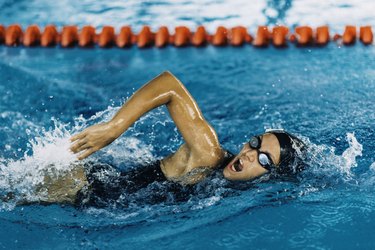
Female Frestyle Swimmer

The speed of human swimming is limited.

Image Credit: microgen/iStock/GettyImages

Do you think you could outswim a shark? In 2017, 28-time Olympic medalist Michael Phelps donned a monofin and pitted his mad swim skills against those of hammerhead and great white sharks.

Although Phelps reached a max speed of 8.8 miles per hour — 87 percent faster than his fastest world record, according to Ultimate Swim Fin, the official distributor of the Lunocet Pro Monofin worn by Phelps — the average swimming speed of the sharks won the race.

Tip

Although Michael Phelps can reach 8.8 miles per hour wearing a monofin, the fastest unassisted human swimmers reach speeds of 5 to 6 miles per hour over short distances.

Know the Water Conditions

How fast a human can swim not only depends on fitness; it depends on water conditions also. Swimming in a pool that is temperature-controlled and free from forces of nature such as waves and currents will naturally produce faster swim times. It’s also easy to veer off course in open water when there aren’t lane lines to keep you in check.

Read more: 7 Tips to Become a Better Swimmer

Competition pools in the U.S. average 78 F to 80 F, according to the United States Water Fitness Association. That’s ideal for the fastest national swimmers, such as Josh Schneider, to swim at speeds of up to 5.3 miles per hour in the controlled conditions for short distances. The Olympic requirements for competition range from 77 F to 82 F according to the Federation Internationale de Natation (FINA) the ideal for optimal human performance.

However, if other people use your local pool for other purposes than competitive swimming, it’s likely much warmer according to the association, which recommends water temperatures of 83 F to 94 F for arthritic or young swimmers. Water below 77 F starts to affect your breathing and average swim speed; water at 70 F or below is dangerous to swim in without a wetsuit per the National Center for Cold Water Safety.

Environment and Average Swimming Speed

Schneider’s national record of 19.36 seconds in the 50 freestyle took place in a 25-yard pool. Put the same swimmer in a 50-meter pool and his time slows to 21.78 seconds or 5.1 miles per hour. The reason is partly because 50 yards equals roughly 46 meters. But his powerful underwater acceleration off the wall in the middle of the short-course swim also helps rocket his speed by 0.2 miles per hour.

Read more: The Ultimate Body-Weight Beach Workout

Open water swimming will slow you down not just because you don’t have any turns to boost your speed. The fastest woman to swim a mile in a 50-meter pool is Luane Rowe, whose national record of 17:22.39 minutes (a speed of roughly 3.5 miles per hour) stands since 2012 according to U.S. Masters Swimming.

Conversely, it takes swimmer Abigail Nunn 20:02.38 minutes (3 miles per hour, approximately) to complete a mile swimming alongside a cable in open water.

Swim Faster at Race Pace

If you want to increase your own speed and spend less time in the pool, try training at race pace. Known formally as Ultra Short Race Pace Training (USRPT), the technique pioneered by Professor Emeritus Brent S. Rushall of San Diego State University involves training the body to swim at a maximum speed over short distances.

The brain “codes” the faster swim into its neurology, effectively training it to move at max speed. When the goal is swimming fast, training your body to plod along at a slow rate over a long distance is counterproductive.

Break your fastest swim time for your target event into chunks. For example, divide your fastest 100-meter freestyle time by four to set a target time for 25-meter repetitions. Your goal is to meet this target time for a set number of repetitions with a specific 15- to 20-second rest interval between them before you “fail out” by your body being unable to maintain the race pace velocity.

Join a swim club specializing in USRPT or enroll in remote sessions to work with coaches trained in this cutting-edge technique to improve your average swimming speed. Clubs in the U.S. currently offering USRPT training include the Race Pace Club in California or Sedona Race Pace Club in Arizona.

Swim lessons 2022 in the Verde Valley

Check out these great options!

RPC Swim School is the Verde Valley’s newest addition to the learn-to-swim menu for Summer 2022.

Summer is a time when we think about getting in the water and cooling off, whether at the local swimming pool, swimming hole, or an exotic beach. It’s also the time when drowning deaths skyrocket, making it a priority for parents to seek out swimming lessons to help prevent tragedy from happening in their own family.  The choice of where to get lessons is, in large part, limited to the availability of lessons in your community. Fortunately, in the Verde Valley, we have a number of options, so no child should have to go without lessons this summer. 

Where to Find Lessons

Your local municipality

If your city or town has a municipal pool that is open to the public during the summer, chances are good that they offer swim lessons. Camp Verde, Cottonwood, and the City of Sedona all offer summer swim lessons. Kids learn in groups from teenage instructors who are on the municipality’s lifeguard staff. 

What they cost: The lessons are financially underwritten by your tax dollars, making the cost very affordable. The municipality absorbs all the costs associated with the pool and training the instructors.  Camp Verde, for example, has a block of 8 lessons for $35. Grants are usually available for financial need providing that the municipality is using an accredited program. 

Considerations: Children learn in a group, which is good, but the group is paced according to a structured timeline based on average learning skills nation-wide, not the individual needs of the child.

Instructors are usually teens, many of whom this is their first job.  You have know way of knowing whether they have experience with teaching younger children (as in siblings, cousins) or a swim background that focused on technique (such as competitive swimming). In most instances, a one- or two-day training program is all that is provided to qualify instructors to teach your child. [The SwimAmerica Program in Camp Verde is an exception: All instructors are Level 1 certified coaches through American Swim Coaches Association (ASCA)].

Your local swim team

Swim teams do more than help kids swim fast. Regular swim training helps children learn focus, life skills such as overcoming challenges, and social skills. Many swim teams across the country have swim schools that can help children learn to swim and introduce them to the benefits of regular swim training, even if they don’t want to be the next Michael Phelps.

In the Verde Valley, AZ, Race Pace Club AZ offers both learn-to-swim and pre-competition swim skills development levels through RPC Swim School. The focus is on bettering their swim skills, building endurance and coordination (experts agree that unless a child can swim 300 yards, they won’t have the skills to save themselves in most instances), and providing a healthy environment of social connection. Kids get a chance to see others on the team working out in neighboring lanes and decide if that’s where they’d like to take their swimming talents.

If your child has basic swim skills where they can swim freestyle for 12 yards or more with their face in the water (taking breaths to the side), they could participate in pre-competition or novice levels of swim team at Race Pace Club AZ. The American Swim Coaches Assn certified / USA Swimming certified coaches focus first on correct technique, second on increasing physical coordination and endurance. The team has a summer league at Camp Verde Heritage Pool and year-round team at Sedona Community Pool. 

A swim school or private instructor

RPC Swim School also offers private lessons at your pool with American Swim Coaches Association certified instructors. These are highly trained individuals with years of swim teaching experience, and background checks. The program is overseen by Program Director Jodi Jato Thornton, a former national swimming medalist who has decades of experience teaching kids and adults. 

Be sure to understand an individual’s qualifications as a swim instructor and if they have certifications through a national organization and whether background checks are required by it. Your child’s instructor can make or break lifelong attitudes toward the water and swimming in general! Make sure that the instructor and their teaching methods are a good fit for your child. 

About teaching methods  

Each child has their own individual learning style. A strong-willed child with a high internal view (meaning they will listen to themselves over any adult) needs a different approach than a tentative child who gets fear-activated easily. Consider teaching methods and program goals to make sure they’re in alignment with your child’s personality and learning style. 

Starfish, Swim America, and Red Cross are the three big programs you’ll see across the country. Each of these teach in a different manner with different goals.

Swim America: Used locally by Camp Verde Parks & Recreationand RPC Swim School. This nationally-accredited program was developed by world-class swim coaches to achieve: 1) lifelong love of the water 2) A relaxation-based learning program where kids can progress at THEIR pace and learning level through use of swim stations 3) The most efficient technique to move most easily and enjoyably through the water and prevent injuries from incorrect/inefficient overuse of joints and muscles. This program takes kids from an enjoyable and safe introduction to the water to being able to swim 300 yards confidently using a 10-station program. The program is easily adapted to children with different learning styles at each station. There is on having fun while enjoying the water safely, developing body coordination, improving efficient technique, building strength specific to swim skills.

Starfish Aquatics: Used by Sedona Community Pool. The program starts with trust and submersion, body positions, and air recovery then progresses to forward movement Includes age-appropriate safety skills such as asking permission, wearing a lifejacket, using flotation to make an assist, treading water, and survival float.

Red Cross: The way many of us learned to swim. This program was used a few years back in the Verde Valley but searching the website for providers in the area yielded no results.  

Things to consider:

  • Skills-based timelines can have children anxious about performing them, doing just enough to “pass” and get the heck out of the pool. 
  • Inexperienced instructors can be nervous/anxious and pass that anxious energy to your child
  • A relaxed child who is enjoying the experience is more likely to develop a lifelong love of the water than someone who is nervous/terrified. 
  • A child who experiences swimming as “having fun safely” in a relaxed manner is more likely to remain calm in an actual emergency as they’ve learned to relax and “think through it” using their inner confidence. This makes them less likely to panic and drown.

Whichever program you choose, know that there are choices within our rural area this summer that will be a good fit for you and your child. Learning to swim develops lifelong skills both in and out of the water!

Class Schedules

Many municipalities offer swim lessons primarily in the morning due to afternoon thunderstorms rolling in, necessitating cancellation due to lightning. However, this year Sedona Community pool also has limited availability.

Booking private lessons at your home or club/HOA pool (such as Los Abrigados, Seven Canyons, Canyon Mesa, Las Piedras, etc.) can take the stress out of having to get your child to the pool.  

RPC Swim School offers once-a-week lessons at the beginner level, making swim lessons easy to work into your schedule. Children have time to mentally process between lessons, practice on their own with their parents and siblings and really internalize and master each lesson. As children progress and develop the core strength to be in the water more often, classes progress up to 4 times weekly as they develop the skills and motivation.  There’s continuity with the same methods/instructors your child grows to trust and love. 

Do you have additional questions? Reach out to me at rpcswimschool@gmail.com

Should I skip practice when I’m sore?

Sore muscles are a common after swim practice. Here’s what to do — and what not to do.

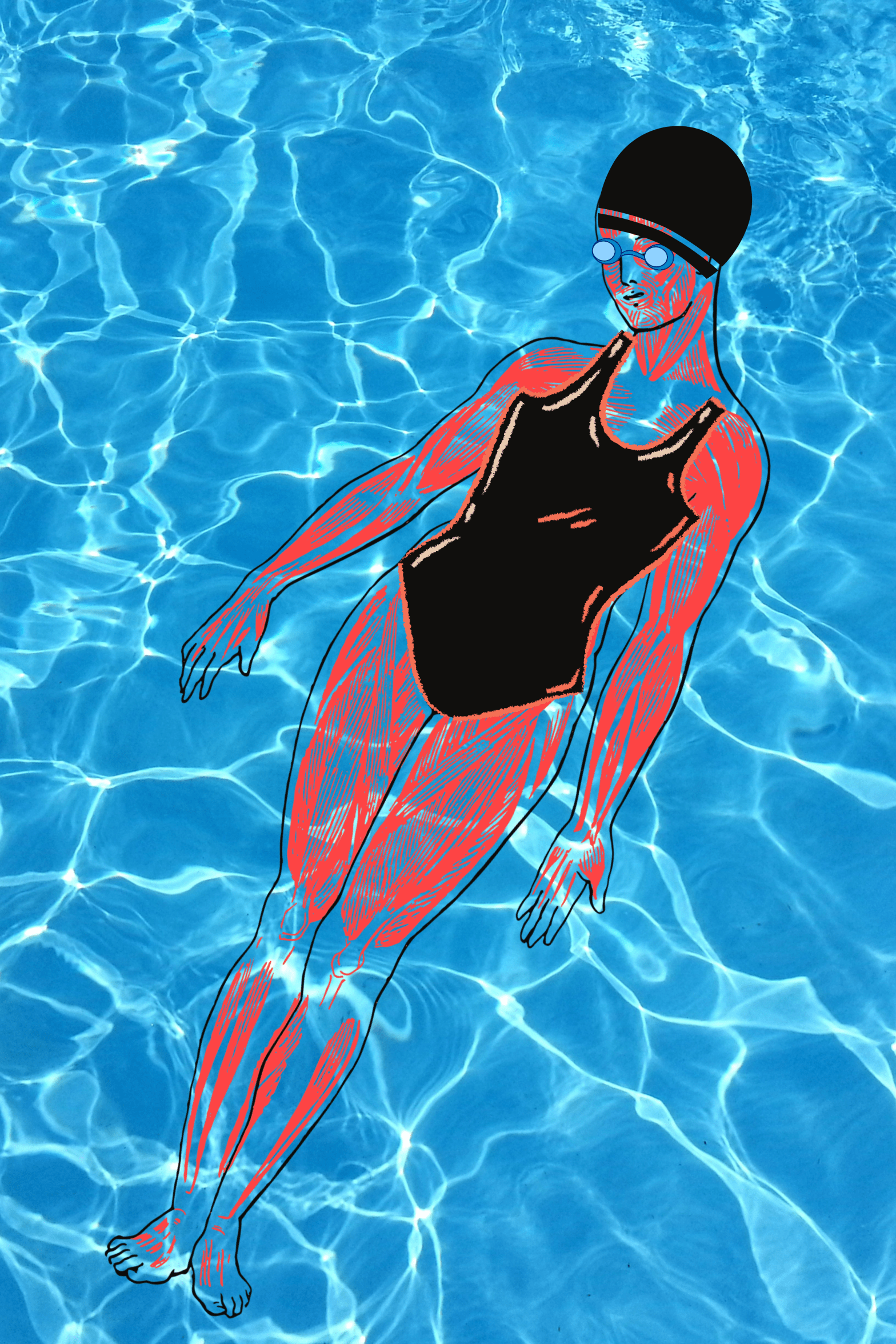
Although swimming is a low-impact exercise, you still use up to 50 muscles at a time. Getting in shape in the pool means you’re often using muscles you might not use in Everyday Land Life. As they develop and strengthen, it’s normal for muscles to feel sore.

It’s also normal for your muscles to feel sore as you develop athletically and take those muscles to new levels of exertion. New swimmers who don’t know it’s normal to feel sore can be afraid that they’ve hurt themselves and therefore want to avoid working out until their muscles aren’t sore anymore.

“You can’t improve unless you push past your limit,” says Race Pace Club AZ Head Coach Sean Emery. “When you push past your limit, your muscles get sore.”

Why are my muscles sore?

Muscles typically tighten up and feel sore 12 to 72 hours after exercise. Muscle soreness that you feel right away after your swim is known as acute soreness. Muscle soreness a day or two after a workout is due to muscles strengthening and repairing themselves and is known as delayed onset muscle soreness (DOMS). 

Sore muscles are caused by microscopic tears as your muscle breaks down and rebuilds itself to be stronger for the task the next time. In the process, natural chemical irritants that cause the soreness are left behind. 

Think of those chemical irritants like food wrappers that are left when you consume takeout or fast food on the go. If you just leave the food wrappers in your car, they start to pile up and look trashy. They might even stink. It takes action to clean them up and get them out of the car.

Sore muscles are the same way. A thorough warm down can help your body process those chemicals and “take out the trash” so to speak, making you less sore. 

What can I do about sore muscles?

Knowing it’s normal can definitely help your mental outlook about it, but the fact remains that your muscles are still sore.  So what should you do? Should you skip practice?

The short answer is “No.” You should NOT skip practice. In fact, skipping practice can be one of the worst things for your sore muscles. 

“To be a great athlete, you have to get comfortable with being uncomfortable.”

– Coach Sean Emery

Help for sore muscles

Once you’re adequately warmed down and out of the pool, there are more things you can do to help your muscles recover. Taking a hot shower or jacuzzi helps your body move the “pain junk” out of the muscles and bring more oxygen to help with repairs. Gentle stretching, foam rolling or massage can also help move the process along.

If you’re really uncomfortable, over the counter creams with menthol can help the discomfort, as can an OTC pain reliever. Most importantly, refuel your body with nutritious food and give it rest in the form of a good night’s sleep to help muscles repair and build.

Consult a medical professional if the pain is so severe that it prevents you from moving, there is redness or swelling over the area, or the pain causes dizziness or trouble breathing. Normal muscle pain should be a general achiness in the affected muscle group; severe pain in a joint, tendon or bone is a clue there might be a different issue.

Minimize the soreness

There’s no way to completely avoid sore muscles. It’s a natural part of athletics and a sign your muscles are getting stronger and more efficient.  However, there are ways to minimize the amount of soreness you experience. 

  1. Warm up adequately. Gett to practice on time and into the pool so you can take advantage of the entire warmup. RPC team warmups include backstroke and freestyle to warm up both the front and back of the shoulders and upper body. A vigorous kick set is also designed to get blood flow to the legs and core. A proper warmup increases blood flow better than stretching. 
  2. Hydrate. Water is essential to helping your body transport nutrients and metabolic waste. It also helps control your body temperature and keeps your joints mobile. Not having enough water in your body means you’re likely to feel cramps during your workout, along with excessive fatigue and possibly even dizziness. 
  3. Swim with the proper technique. Even during warmup and warm down. This will help prevent strained muscles and joints or other injuries from improper movements. 
  4. Cool down, don’t stand-and-talk down. Workouts include cool down swims after challenging sets. This is called “active recovery” and helps your body move oxygen to your muscles and waste products out. Swim easy, practice stroke drills…whatever your coach suggests…just keep it moving to keep your blood cycling oxygen and removing waste products.
  5. Limited rest is built into the workout cycle. Don’t worry: Those muscles you used in 200-yard-butterfly training won’t be doing the same thing tomorrow. Your coach knows to avoid working the same muscle groups in the same way, with the same intensity or the same duration for about 48 hours. You’ll use other muscle groups and commonly used muscles will perform other strokes, less intense versions of the set, etc. so there’s no need to fear the next workout. 
  6. Trust that coaches know your limits. Our coaches are fitness professionals that prioritize safety and injury avoidance. Workouts are challenging, and you WILL feel muscle soreness, but our USRPT and challenge-based sets are designed to naturally work with your body’s neurology to help it adapt to the challenge and then give it recovery. 
  7. Let them be sore. Accept that it’s a natural part of athletics and learn to live with it. “To be a great athlete, you have to get comfortable with being uncomfortable,” says Coach Sean. “If you don’t like sore muscles, maybe you need to switch to playing the piano or picking up an artist’s paint brush. It’s just part of the game.”

New Swim Parents FAQ:

Should my child wear a cap and goggles?

The short answer? Y E S .

When you sign up your child for Race Pace Club AZ training, your child receives one team cap in addition to a t-shirt. Although it’s not mandatory to use a cap during swim practice, there are many reasons to do so.

  • Wearing a cap keeps long hair out of a swimmer’s eyes, nose, and mouth. This allows them to position their head correctly to learn the proper technique. Swimmers without caps spend unnecessary time, effort, and focus on wiping water out of their eyes, wiping hair away from their mouth, etc. They need to lift their head incorrectly to keep their hair from going over their face.
  • Caps keep strands of hair from getting tangled in goggle straps during workout.
  • Wearing a cap help keeps the pool operating at its best as there is less hair floating in the pool to clog the filtration system and fewer hair chemicals (shampoo, conditioner, styling products) to adversely affect water chemistry. 
  • Helps swimmers hear better as wet hair isn’t over their ears, muffling the sound when they come out of the water.
  • Prevents children from having to wipe away water from eyes, mouth, ears each time they finish a swim.
  • Protects the hair from pool chemicals that can cause drying and hair damage.
  • Silicone or latex caps keep the head warmer during windy or cool weather. 
  • Helps keep goggles in place when practicing starts. The goggle strap clings to the silicone cap instead of sliding across hair.  For even more stay-power, wear the cap over the goggle strap.
  • Swim caps reduce drag from hair in the water. This is important on race day. However, waiting until race day to wear a cap can feel unfamiliar and add to any nerves and butterflies the swimmer is already experiencing about their race.

Swim cap cautions

  • If the cap isn’t on the head properly or is too large for your child, it can hinder hearing or be a distraction to your child and others if they need to keep stopping to fix it. 

If your child doesn’t like silicone or latex caps, caps made from material such as spandex let the water flow onto the scalp but keep hair wisps out of the eyes, ears, nose and mouth as well as preventing hair tangling in the goggle straps. Material caps tend to stretch out over time and don’t return to their normal size. 

Goggles Pros

Most kids prefer wearing goggles as it helps them see clearly and keeps their eyes from getting sore from the pool water and sunlight.

Here are some other benefitsL 

  • Develops spatial awareness in being able to see underwater
  • Assists in swimming straight

Goggles Cons

  • Poorly fitting goggles waste precious swimming time from children adjusting them
  • Swimmers become reliant on goggles & panic when they don’t have them (We usually keep extra pairs at Camp Verde)

How to introduce your child to wearing a cap and goggles:

The first time your child wears a cap and goggles, it’s going to feel unfamiliar and be distracting to them. As with any aspect of swimming, getting your child used to wearing them before they come to workout will help the child focus without distraction when it’s time to get in the water with the team.

You can buy an extra cap through our team store or order a silicone cap to practice with from smiles.amazon.com —(a donation from Amazon helps support team expenses). Let your child learn to loosen and tighten his own goggles, put on her own swim cap, etc.  Let your child put them on a teddy bear or doll to see how they look. It’s good to practice putting on a cap ahead of time — most children will need help from their parents or an older sibling before swim practice to get their cap on properly. 

Teach your child how to loosen or tighten the goggles and check to make sure your child’s goggles are adjusted for comfort and to effectively keep out water. Spending time fiddling with goggles takes away swimming time at the pool workout and distracts other children. 

Swimming: Brain-building exercise

Swimming can help build a better brain and improve skills outside the water as well as in the pool.

You probably know that swimming is one of the best forms of exercise due to its low impact and high calorie burn. But did you know that swimming benefits the brain as much as the body? This is especially true when it comes to the developing brains of children and young adults.

By the time a child reaches 6 years old, the brain is 90 to 95% the size it will be when they reach adulthood. However, the brain goes through heavy development all the way into the mid-20s. That’s why it’s essential to provide healthy environments and structured activities geared toward optimal brain development.

How swimming helps the brain

Brain benefits of swimming break down into three basic areas:

  • Exercise-induced benefits, including endorphins and increased blood flow to the brain.
  • Water-induced benefits: Blood flow to the brain increases by around 14% just by being immersed in the water.
  • BDNF — a brain-generated protein that helps repair cells and build new ones.

Together, these factors positively affect children’s mental, emotional and intellectual development. 

Swimming helps improve memory

But your kids don’t have to break out the flashcards to build brain power. Regular high-energy swimming encourages the growth of new neurons in the brain’s hippocampus, the part that promotes memory retention. Part of the benefit is due to water itself: A 2014 study found that blood flow to the brain increased by 14% just by being immersed in water up to the chest.

A 2017 review of studies by the University of South Wales found that the working memory wasn’t the only thing positively impacted by the exercise-induced effects of swimming — self control, selective attention, cognitive flexibility, intelligence, and academic achievement were also among the most-noted benefits. Swimming assists kids with spatial learning, pattern separation, executive function, and processing speed.

Swimming help builds confidence

Self-confidence is essential in everyday life whether your child wants to succeed in athletics in or out of the pool, excel in schoolwork, or just enjoy and experience life on a more integrated level. These are some of the areas that energetic team swimming can help develop:

Adaptability Directionality Problem solving

Balance Focus Self esteem

Body Image Laterality Self reliance 

Cognition Perceptual motor abilities

Spatial orientation Social interaction skills

Swimming helps build positive mental health

Getting into the pool and swimming offers a sense of mental well-being, clearing the mind and encouraging positivity.

Being part of a swim team involves being part of a social unit. Teammates encourage one another and share challenging experiences. 

Swimming supports the body in a relatively weightless environment, helping the body and the mind relax. 

Join the fun

We can help your child reach their potential in the water through our fun, energized workouts and technique instruction. Regular participation in these swimming activities can help them achieve their greatest potential in other areas of life.

Check out our website — sedonaracepace.com — to schedule a tryout or register for team or lessons.

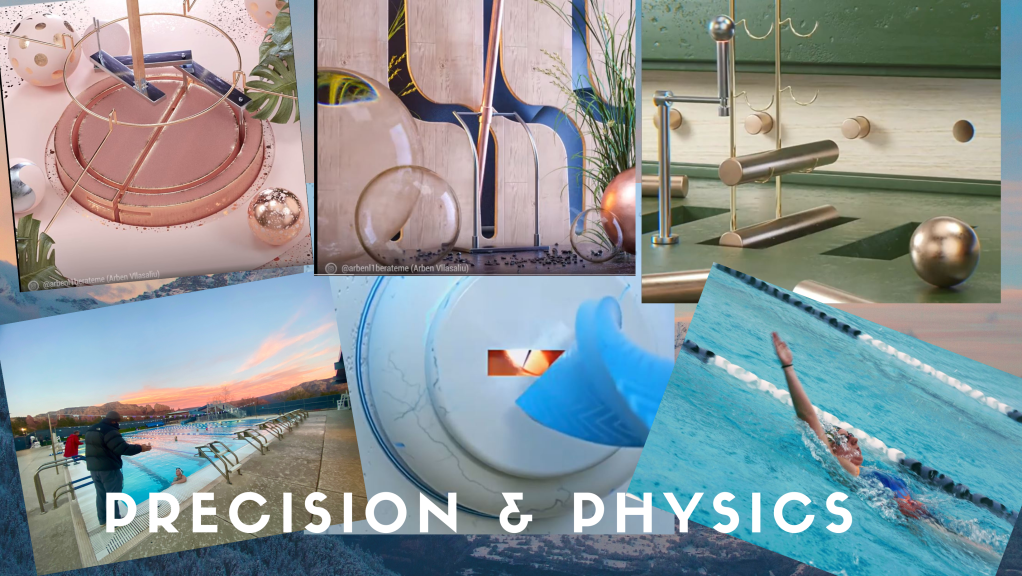
Physics Precision and Swimming Success

Precision in physics makes cool things happen: Especially in the pool!

“Physics Can Be Incredibly Satisfying.” That’s the title of a science video that is, indeed, quite true to its name. Best watched with the sound turned on, the 9-minute and 44-second video captivates from the start with balls, bars, and bezels rolling and sliding on objects reminiscent of cake table decorations at a wedding reception.

But the real fascination starts with the more machinery-oriented physics that starts just over a minute into the video. A hammer strikes the end of one cylindrical peg after another, sending each flying through the air only to land perfectly in the awaiting hole a foot or so away as it slides by on a conveyor. A revolving bar passes intricately through curved cutouts in a moving panel. Automated blades slice, marbles perform skateboard-park type tricks, and lasers carve out exactly identical cutouts, all backed with a satisfying sound.

When “good enough” isn’t good enough

What those amazing physics demonstrations all had in common was precision. If even one of those cylinders had an imperfection as tiny as a dot of extra metal, or the timing was off of the recipient holes varied by a thousandth of a second, or if those holes were off in size by even a fraction of a millimeter —we’d be witnessing the cylinder, dropping, clanging and rolling off. Not to mention marbles flying off their precarious arc tracks and general hit-or-miss chaos.

Swimming physics matter

The same holds true in swimming. Even a tiny correction can make a big difference. Each miniscule change in hand position, head position, body position, etc. either creates or eliminates water resistance. The less of this drag on your body, the more effective each stroke becomes, and the more effortlessly you’ll move through the water. You’ll find yourself able to swim faster, since you’re pushing yourself through the water in the most effective way, not pushing extra water along with yourself. 

This is apparent time and again as SRPC Head Coach, Sean Emery works with swimmers during sets to make seemingly tiny corrections in their stroke with always-surprising big results. In one recent Saturday set, a swimmer who had plateaued in 200 freestyle training was able to swim each 50-meter rep a minimum of four seconds faster with no failed reps in the set, just by continuing to focus on three small corrections throughout.

Technique is so important that it’s a primary focus of every workout at Sedona Race Pace Club. A weekly focus on one aspect of the strokes — such as head position, hand entry, etc. — is common. Drills can help swimmers get the “feel” for the correction, but it’s only by performing the correction at race pace that the neurological system “wires in” the change for use during competition. 

Improving precision at race pace

The body has a way of wanting to go back to its old pattern once it starts to become fatigued. That’s why it’s crucial to train it at maximum effort to make the change permanent and available when your body is going all-out at a meet.

Race pace sets are designed for a swimmer to go “all-out” to the point where it can no longer maintain the pace. A rest after a failed rep lets the neurology adapt — kind of like calibrating one of the machines on the physics video —and it’s common to swim faster after the rest until the body again tires out. 

Falling back into an old stroke pattern when you’re fatigued just reinforces the bad technique. It’s oh-so-natural to want to use that old stroke where you “know” you can make the goal time. It’s not unusual for a swimmer to do this completely unconsciously as the improper way is usually comfortable like an old pair of worn-out slippers.

This is when it’s more vital than ever to focus on swimming with the new correction to your stroke, even if it means you might fail out of the set sooner than you would with your old technique. New positions mean using your muscles differently, which can tire them sooner than they would in the old pattern. It feels weird. And it should! But the only way to build and strengthen those new muscle patterns is by using them.

Think about it — then act on it!

You can watch Hashem Al-Ghaili’s Science/Nature Page video here. When you do, think about what would happen if even one of the aspects of those precise physics were off. Marbles would be flying everywhere. Cylindrical pegs would be bouncing around instead of landing securely in place. And lasers might just destroy the place. 

Be the machine. Be the precise machine. Your body — and swim times — will thank you for it.

To level up in your swim game, find out more about swimming with Sedona Race Pace Club / Race Pace Club Arizona. Check out our website or call Head Coach Sean Emery at 928.254.7762.`

How good coaches motivate swimmers

Swim coach Sean Emery works on swimming technique with Sedona Race Pace Team in Sedona, Arizona.

Having a knowledgeable coach is one of the most important things you can do if you want to see improvements in your swim times. But when it comes to keeping swimmers motivated, they come in third on the list behind self-motivation and reinforcement from peers.

According to Ultra Short Race Pace Training (USRPT) founder, Brent Rushall, Ph.D., the primary reinforcers for swimmers pursuing the sport long-term might not be what you’d initially expect.  It doesn’t involve diligent parental lectures or tireless attention from a coach. It doesn’t hinge completely on peers, either.

Although parents, coaches and peers are all very vital components of helping swimmers stay motivated, dedicated kids have self-actuated reasons.  One of our 8 & Under Sedona swimmers said it best: “It’s just fun!

The swimmer motivation cycle

Coaches complete the circle of motivation by providing a solid framework for swimmers to connect with their own internal motivation.  At Sedona Race Pace Club, that includes a combination of specific ultra short race pace sets, drills, warm-up and warm-down activities, and targeted technique instruction designed to give swimmers the opportunity to improve. 

Race pace sets allow kids to compete daily against their own best times and set performance as well as reaching for goal times they want to achieve in meets. These might include qualifying times for sectional or national meets, or reaching time goals set with their coach. 

Helping swimmers stay motivated

A good coach is paying attention to each swimmer, which means they won’t be necessarily cheering on your every rep. That motivation needs to come from your own inner talk. And if you’re one of the last few left in the USRPT set that hasn’t failed out — especially if you’re on track to “graduate” by making all the reps at or faster than your goal time — chances are, you’re getting lots of encouragement from both the coach and your teammates.

A good coach will be there to help you work on technique, which can provide the boost you need to make the next forward leap in your time improvement. He’ll be there calling out times and regaling swimmers with constructive feedback between reps to help guide their own inner talk and focus.

Sometimes coaches motivate by pulling a struggling swimmer aside and having them swim extra reps. “I’m not giving up on you, so don’t you give up on this,” Coach Emery recently told a swimmer who felt they had reached a plateau. 

The set plateau was not only shattered thanks to a little extra one-on-one attention and technique coaching, but the swimmer achieved a new best time in a practice time trial — wearing a workout suit! 

Sedona Race Pace Club’s knowledgable and caring coaches work directly under the supervision of Head Coach Sean Emery to help swimmers of all abilities achieve their potential. We have programs for novice, age group, elite, and masters swimmers. 

Does Sedona Race Pace Club sound like something you’d like to be a part of? Contact our Head Coach Sean Emery at 928-254-7765 for a consultation to find your niche with our team!